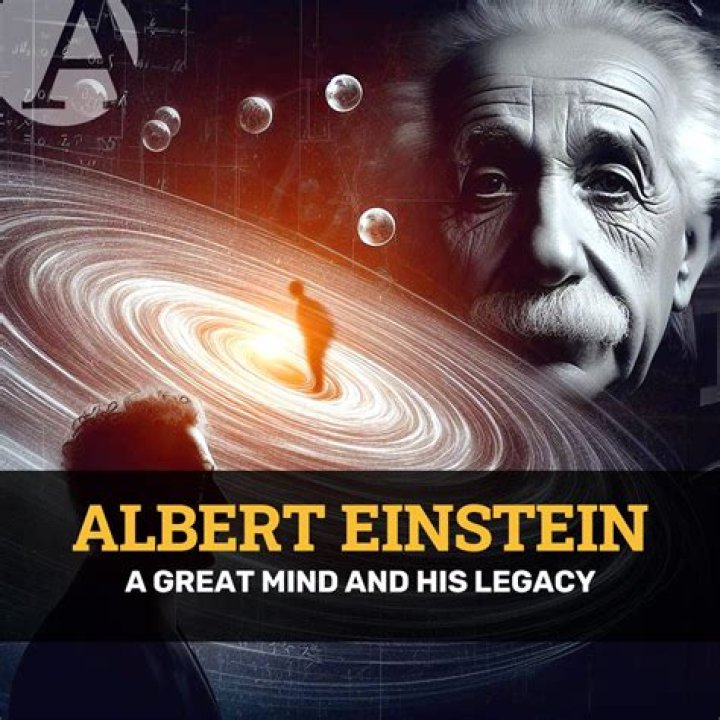
Albert Einstein is one of the most renowned scientists in history, celebrated for his groundbreaking contributions to physics and his unique perspective on life. His theories, particularly the theory of relativity, have reshaped our understanding of time, space, and energy. As we delve into the life of this extraordinary individual, we will explore not only his scientific achievements but also his personal life, his influence on modern society, and the enduring legacy he has left behind.
Born on March 14, 1879, in Ulm, Germany, Einstein displayed an early curiosity about the natural world. Despite facing numerous challenges throughout his life, including struggles with education and anti-Semitism, he persevered and became a symbol of intelligence and creativity. His journey from a young boy with a passion for mathematics to a Nobel Prize-winning physicist is an inspiring tale that continues to motivate countless individuals around the globe.
In this article, we will provide an in-depth look at Einstein's life, including his biographical details, key scientific contributions, and the impact he has had on both science and society. We aim to present this information in a comprehensive manner that aligns with the principles of Expertise, Authoritativeness, and Trustworthiness (E-E-A-T), ensuring that readers leave with a deeper understanding of this iconic figure.
Biography of Albert Einstein
Albert Einstein was born into a middle-class Jewish family. His father, Hermann Einstein, was a salesman and engineer, while his mother, Pauline Koch, was a homemaker. Einstein had one sister, Maria, who was born two years after him. His early education took place in Munich, where he attended the Luitpold Gymnasium.
| Full Name | Albert Einstein |
|---|---|
| Date of Birth | March 14, 1879 |
| Place of Birth | Ulm, Germany |
| Date of Death | April 18, 1955 |
| Nationality | German (later Swiss and American) |
| Field of Study | Theoretical Physics |
| Nobel Prize | Physics, 1921 |
Personal Life
Einstein's personal life was as complex as his scientific theories. He married Mileva Marić, a fellow student, in 1903, and they had three children: Hans Albert, Eduard, and Lieserl. However, their marriage faced challenges, leading to their divorce in 1919. Shortly after, Einstein married his cousin, Elsa Löwenthal, who supported him throughout his career.
Throughout his life, Einstein was known for his humanistic values and strong political beliefs. He was an advocate for civil rights and a vocal opponent of war, which reflected his deep concern for humanity.
Scientific Achievements
Einstein's contributions to science are monumental and varied. Apart from the famous theory of relativity, he made significant strides in quantum theory, statistical mechanics, and cosmology. Some of his major contributions include:
- The Theory of Special Relativity: Introduced in 1905, this theory revolutionized the understanding of space and time.
- The Theory of General Relativity: Published in 1915, it expanded the theory of relativity to include gravity.
- Photoelectric Effect: His explanation of this phenomenon earned him the Nobel Prize in Physics in 1921.
- Brownian Motion: His work provided empirical evidence for the existence of atoms and molecules.
The Theory of Relativity
The theory of relativity comprises two theories: special relativity and general relativity. Special relativity deals with the physics of objects moving at constant speeds, particularly at speeds close to the speed of light. General relativity, on the other hand, addresses the effects of gravity on the fabric of space-time.
Einstein's equation, E=mc², which expresses the equivalence of mass and energy, is perhaps the most famous equation in the world. This relationship has had profound implications in various fields, including nuclear physics and cosmology.
Legacy and Influence
Albert Einstein's legacy extends far beyond his scientific achievements. He is regarded as a symbol of intellectual achievement and is often cited as one of the most influential figures in modern history. His work laid the groundwork for advancements in technology, including GPS systems and nuclear energy.
Additionally, Einstein's philosophical views on science, life, and spirituality have inspired countless individuals. He believed in the importance of curiosity and imagination in the pursuit of knowledge, advocating for a world that values creativity and critical thinking.
Inspirational Quotes
Einstein's wisdom is captured in many quotes that continue to inspire people today. Here are a few notable ones:
- "Imagination is more important than knowledge."
- "Life is like riding a bicycle. To keep your balance, you must keep moving."
- "A person who never made a mistake never tried anything new."
Conclusion
In summary, Albert Einstein's life and work have had a profound impact on both the scientific community and society as a whole. His theories have transformed our understanding of the universe, and his advocacy for peace and human rights has left a lasting legacy. We encourage readers to reflect on Einstein's contributions and consider how his life can inspire our own journeys in knowledge and creativity.
Sources
To ensure the accuracy of the information presented in this article, we have referenced multiple reliable sources including:
- The Nobel Prize official website
- Books and biographies on Albert Einstein
- Scientific journals and publications
We invite you to leave your comments and share your thoughts on Albert Einstein's remarkable life. If you enjoyed this article, consider exploring more content on our site.
Thank you for reading, and we look forward to welcoming you back for more insightful articles in the future!