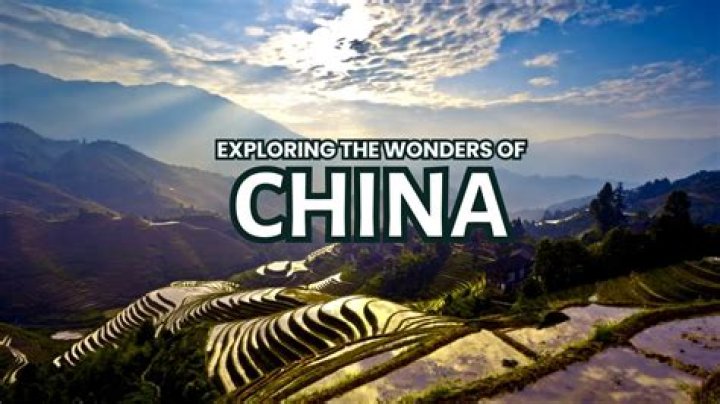
China, a land of rich history and vibrant culture, offers myriad experiences for travelers and scholars alike. Its vast landscapes, ancient traditions, and rapid modernization make it a fascinating subject for exploration. In this article, we will delve into various aspects of China, from its historical significance to its modern-day marvels, while employing the principles of Expertise, Authoritativeness, and Trustworthiness (E-E-A-T).
The objective is to provide a thorough understanding of China, focusing on its culture, geography, economy, and more. By the end of this article, readers will have a well-rounded perspective on this incredible nation, making it an essential read for anyone interested in learning more about China.
We will break down the content into easily digestible sections, ensuring that each element of this vast topic is covered comprehensively. So, whether you're planning a trip to China or simply want to expand your knowledge, keep reading to discover the wonders that await you.
Biographical Overview of China
China, officially known as the People's Republic of China (PRC), is the most populous country in the world, with over 1.4 billion residents. It has a rich cultural heritage that dates back thousands of years. Below is a quick reference table for key facts about China:
| Fact | Details |
|---|---|
| Capital | Beijing |
| Official Language | Mandarin Chinese |
| Area | 9,596,961 square kilometers |
| Currency | Renminbi (Yuan) |
| Population | Over 1.4 billion |
| Major Religions | Buddhism, Taoism, Confucianism |
Geography of China
China's geography is as diverse as its culture. The country boasts a wide range of landscapes, from the towering Himalayas in the southwest to the flat plains of the east. Here are some key geographical features:
- Mountains: The Himalayas, Tianshan, and Kunlun mountain ranges.
- Rivers: The Yangtze and Yellow Rivers are the longest and most significant rivers in China.
- Deserts: The Gobi and Taklamakan deserts are among the largest in the world.
- Climate: China experiences various climates, including tropical, temperate, and polar.
Major Regions of China
China can be divided into several major regions, each with its unique characteristics:
- North China: Known for its plains and significant historical sites.
- South China: Features lush landscapes, rice paddies, and subtropical climates.
- East China: Home to major cities like Shanghai and Hong Kong.
- West China: Characterized by deserts and mountain ranges.
A Brief History of China
China's history is one of the oldest in the world, spanning over 5,000 years. Some critical periods include:
- Ancient Dynasties: The Xia, Shang, and Zhou dynasties laid the foundation for Chinese civilization.
- Imperial China: The Qin, Han, Tang, and Ming dynasties marked significant advancements in culture and technology.
- Modern Era: The Qing dynasty fell in 1912, leading to the establishment of the Republic of China.
- Communist China: The People's Republic of China was established in 1949, shifting the nation's direction significantly.
Influential Events in Chinese History
Several events have shaped China's history:
- The Great Wall of China construction began in the 7th century BC.
- The invention of paper and gunpowder during the Han and Tang dynasties.
- The Opium Wars in the 19th century, leading to foreign influence and trade imbalances.
- The Cultural Revolution in the 1960s, which sought to preserve communist ideology.
Culture and Traditions
Chinese culture is characterized by its diversity and history. It encompasses various aspects, including:
- Language: Mandarin is the official language, with many dialects spoken across regions.
- Festivals: Major festivals include the Spring Festival (Chinese New Year), Dragon Boat Festival, and Mid-Autumn Festival.
- Arts: Traditional arts such as calligraphy, painting, and opera are highly regarded.
- Cuisine: Chinese cuisine is diverse, featuring regional dishes from Sichuan spicy food to Cantonese dim sum.
Philosophical Influences
Key philosophical schools have influenced Chinese culture:
- Confucianism: Focuses on morality, family, and social harmony.
- Taoism: Emphasizes living in harmony with the Tao, or the fundamental nature of the universe.
- Buddhism: Introduced from India, it has significantly influenced Chinese spirituality.
The Economy of China
China's economy is the second-largest in the world, characterized by rapid growth and transformation. Key aspects include:
- Manufacturing: China is often referred to as the "world's factory," producing a vast array of goods.
- Technology: The tech industry, including companies like Alibaba and Tencent, plays a pivotal role in the economy.
- Trade: China is a leading exporter and has numerous trade agreements worldwide.
- Investment: Foreign Direct Investment (FDI) continues to pour into various sectors in China.
Economic Challenges
Despite its growth, China faces several economic challenges:
- Environmental issues due to rapid industrialization.
- Income inequality between urban and rural areas.
- Geopolitical tensions affecting trade.
Tourism in China
China is a top travel destination, attracting millions of visitors each year. Highlights of tourism in China include:
- The Great Wall of China: A symbol of China's history and engineering prowess.
- The Forbidden City: A UNESCO World Heritage site in Beijing.
- Terracotta Army: An archaeological marvel located in Xi'an.
- Natural Wonders: Stunning landscapes such as Zhangjiajie and Jiuzhaigou Valley.
Travel Tips for Visiting China
Here are some essential tips for travelers:
- Learn basic Mandarin phrases to enhance communication.
- Respect local customs and traditions.
- Be prepared for varying air quality levels in major cities.
- Try local food, but be cautious if you have dietary restrictions.
Conclusion
In conclusion, China is a nation of contrasts, where ancient traditions coexist with modern advancements. From its geographical diversity to its rich cultural heritage, there is much to